

There’s a kind of experience that’s difficult to explain.
Nothing is obviously wrong. You’re functioning. You’re showing up.
But something feels… off.
What used to feel manageable now feels heavier. What used to feel clear now feels harder to access. You’re still moving forward—but not in the same way.
And because there isn’t always a clear reason, it becomes easy to question yourself.
Why do I feel like this? Why can’t I get back to normal?
If you’ve asked those questions, you’re not alone.
And more importantly, you’re not broken.
You’re Not Broken—You’re Unrestored
In both clinical language and everyday conversation, we often use words like burnout, stress, or anxiety to describe this experience.
Those words aren’t wrong—but they’re often incomplete.
What many people are actually experiencing is something deeper:
👉 Internal disruption that hasn’t yet been recognized, regulated, or restored.
When something within you has been impacted—but not fully processed—it doesn’t just disappear. It shows up as:
emotional overwhelm
difficulty focusing
increased reactivity or disconnection
a sense that you’re no longer fully yourself
This is where restoration begins.
Why Emotional Overwhelm Happens
One of the most misunderstood aspects of mental health is this:
👉 Your ability to think clearly depends on your internal state.
When your system is overwhelmed, your brain shifts away from clarity and toward protection.
This is why:
simple decisions feel difficult
your thoughts feel scattered
everything feels heavier than it should
It’s not a failure of thinking.
It’s a signal that your system needs stabilization.
A Trauma-Informed Framework for Healing
This is exactly why I created Restoration Psychology—a structured, trauma-informed approach to understanding what feels “off” and how to move forward.

At the center of this model is the 5R Process:
Recognize
What are you actually carrying?
Regulate
What does your system need to stabilize?
Reframe
What meaning have you assigned—and is it accurate?
Rebuild
What actions align with who you are becoming?
Restore
What supports long-term stability and sustainability?
This isn’t about quick fixes or forced positivity.
It’s about understanding what has been impacted—and responding to it intentionally.
Why So Many People Stay Stuck
Many people never move through this process because they skip the first step.
They don’t recognize what they’re carrying.
Instead, they:
push through
minimize their experience
focus only on external responsibilities
Over time, this creates a disconnect between how they appear and how they actually feel.
You can function for a long time without feeling aligned.
But eventually, the internal strain becomes harder to ignore.
What It Means to Feel Like Yourself Again
Restoration isn’t about going back to who you were.
It’s about moving forward with:
greater awareness
clearer thinking
more aligned decisions
sustainable emotional capacity
It’s not dramatic.
It’s subtle—but consistent.
And over time, that consistency changes everything.
If This Resonates, This Book Is For You
If you’ve been feeling overwhelmed, disconnected, or unsure how to move forward, I wrote this book for you.
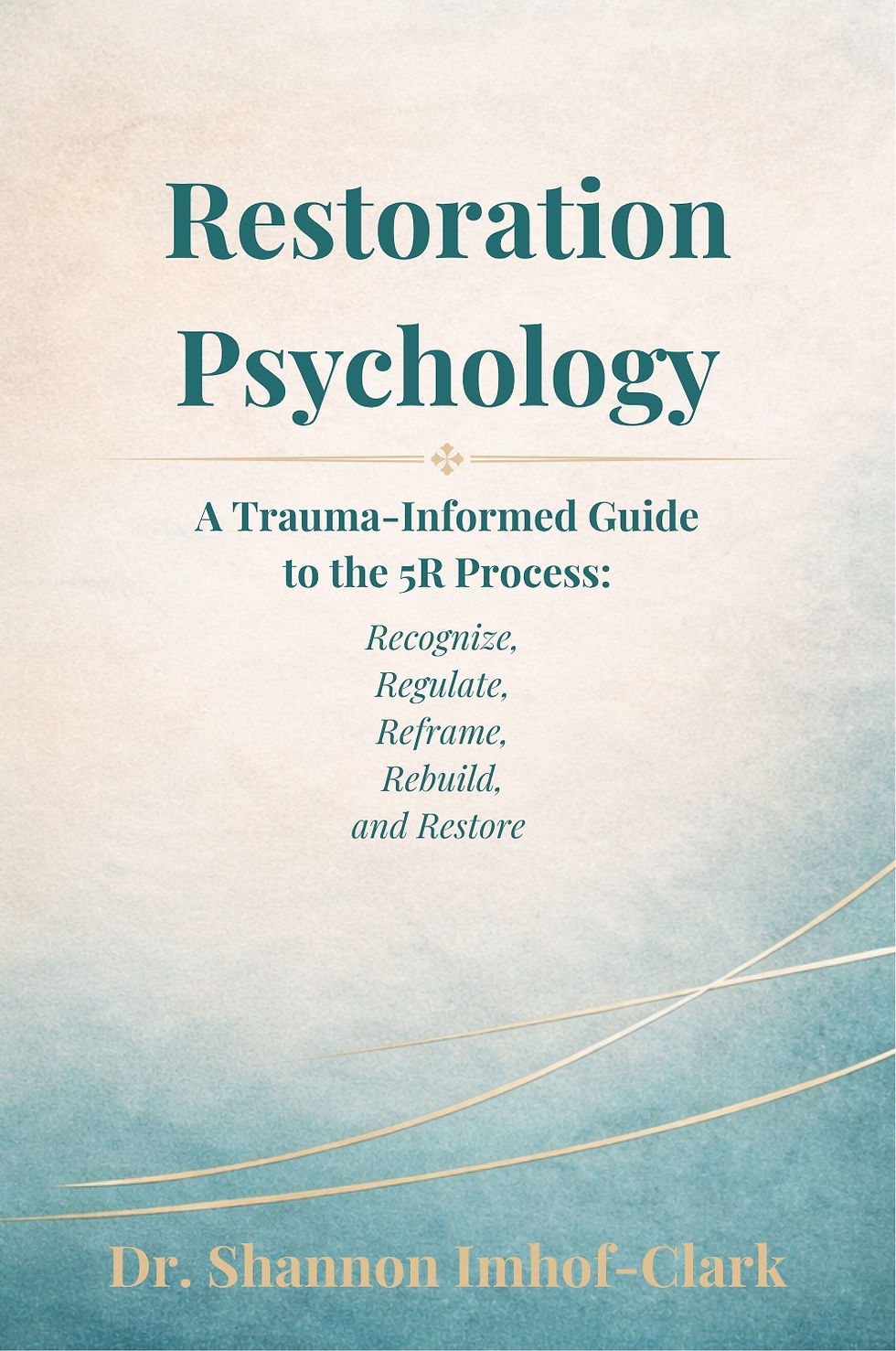
Restoration Psychology: A Trauma-Informed Guide to the 5R Process introduces a clear, structured way to understand what you’re experiencing—and how to restore from it.
👉 You can explore the book here:https://www.amazon.com/dp/B0GRTJ68JC
Final Thought
You don’t need to become someone new.
You need to understand what has been impacted—and how to restore from it.
Because you were never broken.
You were unrestored.


Comments